Security priorities compete without direction
Teams can see dozens of worthwhile improvements but still lack a defensible way to sequence investment, assign ownership, and connect work to business risk.
Security leadership and strategy sized to the work in front of you.

Experienced guidance across the security program
CulperSec advisory services give organizations experienced security leadership, a structured decision process, and practical outputs without assuming every need requires a full-time executive or an open-ended consulting engagement.
Teams can see dozens of worthwhile improvements but still lack a defensible way to sequence investment, assign ownership, and connect work to business risk.
Technical findings, compliance requirements, vendor concerns, and operational constraints often reach leadership through separate processes with no common decision model.
Documents may satisfy a requirement at one point in time while actual responsibilities, systems, and business practices continue changing around them.
Both models use the same experienced security practitioners. The difference is whether your organization needs recurring leadership or a defined outcome around a specific initiative.
Ongoing engagement
Add recurring security leadership and program oversight for organizations that need an experienced partner involved in decisions over time.
Defined engagement
Focus experienced support on a specific strategy, risk, governance, security documentation, policy, or program objective with defined outputs and timing.
The engagement is built around decisions, ownership, and artifacts your organization can continue using after a workshop or advisory meeting ends.
Design or strengthen the governance, ownership, processes, priorities, and operating structure needed to manage cybersecurity as an ongoing business function.
Build a program that can operate
Translate business objectives, risk, technical gaps, and regulatory pressure into a sequenced roadmap with realistic dependencies and investment priorities.
Turn priorities into a plan
Establish practical methods to identify, evaluate, treat, accept, communicate, and revisit cybersecurity risk across the organization.
Make risk decisions repeatable
Assess documentation gaps, then draft, update, or maintain security policies, standards, procedures, and plans that reflect actual operations, ownership, and applicable requirements.
Build documentation teams can use
Define useful measures, reporting rhythms, and leadership updates that explain posture, progress, decisions, and resource needs without hiding behind technical volume.
Give leadership decision context
Provide experienced security perspective for planning, customer and board questions, audit preparation, major initiatives, and cross-functional decisions.
Add experience when it matters
Advisors can frame risk, challenge assumptions, and create structure, but security decisions only work when the organization owns the priorities, authority, and implementation behind them.
CulperSec advisors
We provide the security leadership, independent analysis, decision structure, and practical artifacts needed to move the program forward.
Evaluate the current state, challenge assumptions, identify decision gaps, and apply experience from security programs across different environments.
Turn broad concerns into clear options, risk tradeoffs, accountable owners, sequenced work, and decisions leadership can evaluate.
Develop roadmaps, governance models, risk methods, policies, procedures, metrics, and other outputs that teams can actually maintain and use.
For ongoing engagements, revisit progress, changing risk, new initiatives, leadership questions, and priorities on an agreed schedule.
Your leadership and delivery teams
You retain business authority, provide organizational context, sponsor decisions, and own the internal work required to sustain change.
Provide organizational objectives, constraints, regulatory context, risk tolerance, and the outcomes security work needs to support.
Connect the right technical, legal, compliance, finance, HR, and business stakeholders so recommendations reflect how the organization operates.
Retain executive authority for risk acceptance, investment, policy approval, accountability, and changes that affect business operations.
Assign responsible teams, execute approved work, manage organizational change, and keep security practices active between advisory sessions.
The cadence scales from a focused consulting project to a recurring vCISO relationship while preserving the same progression from context to priorities, enablement, and review.
Understand business objectives, current security practices, stakeholders, obligations, constraints, active initiatives, and known concerns.
Evaluate the current operating model, decision gaps, material risks, documentation, capabilities, and alignment between security and the business.
Separate immediate needs from longer-term improvement and agree on the risks, dependencies, owners, and outcomes that shape the work.
Develop the roadmap, governance, policies, risk methods, metrics, and leadership material needed to move decisions into operation.
Measure progress, adjust for business and threat changes, resolve new decisions, and keep priorities current for the duration of the engagement.
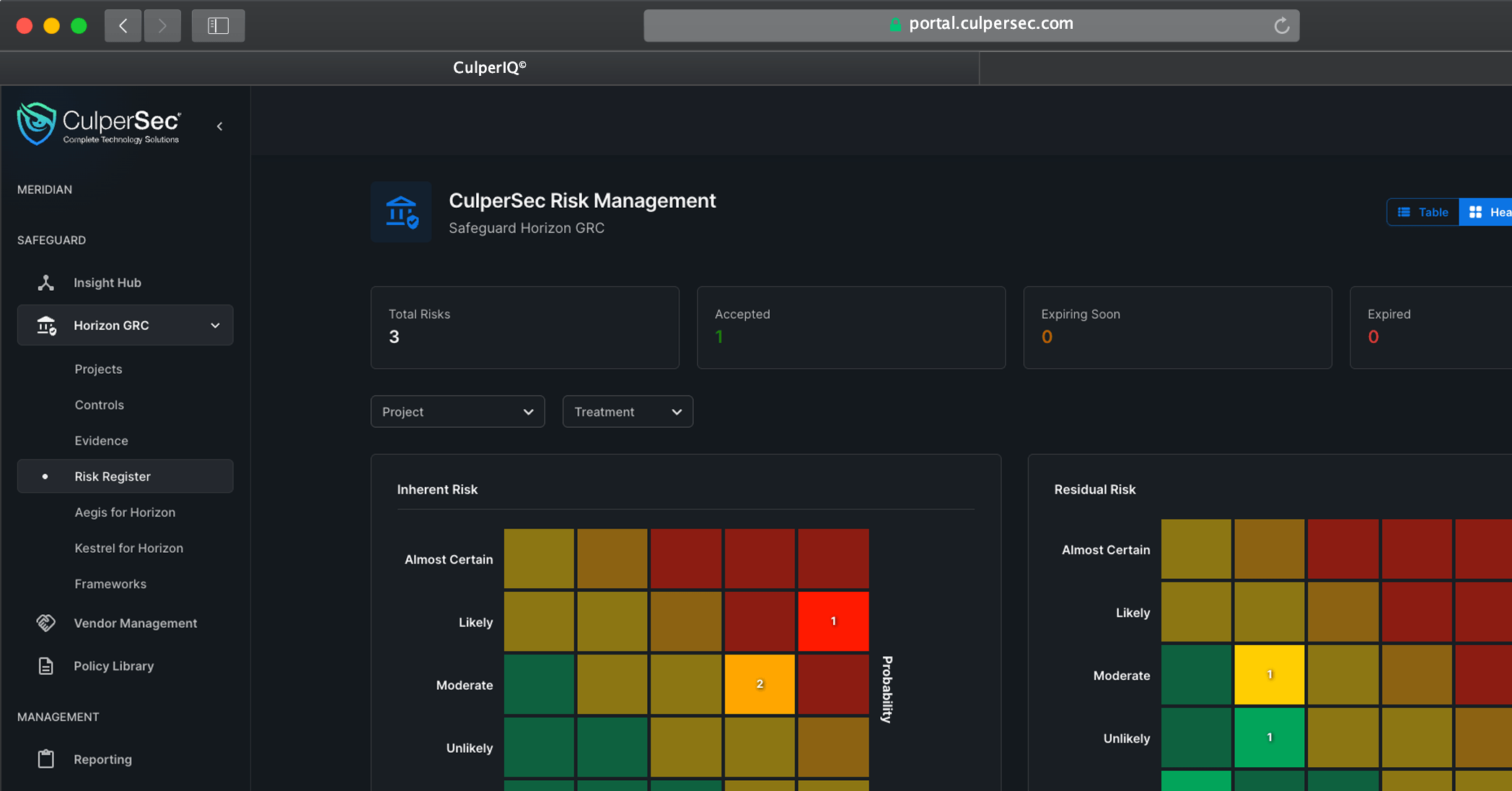
When the engagement calls for structured risk, governance, or documentation workflows, CulperIQ modules can support the work. Platform access and module scope are defined separately for each engagement.
Maintain frameworks, controls, evidence, risks, ownership, and reporting in a practical governance workspace.
Draft, review, version, maintain, and export security policies and procedures from a collaborative documentation workspace.
The result is not a collection of generic recommendations. Teams receive priorities, governance, risk context, and operating artifacts designed around the organization they actually need to secure.
Tell us whether you need recurring vCISO support or help with a defined initiative. We will scope the right advisory model around the decisions and outcomes in front of your team.